Data-Driven NFL Wagering
NFL Betting UK: Data-Driven Strategies and Sportsbook Odds
 Available in US
Table of Contents
- NFL Betting Algorithms: Core Pricing Principles and Market Data
- The UK NFL Betting Market in Numbers
- How NFL Betting Works for UK Punters
- Choosing a UK Bookmaker for NFL Wagering
- Core NFL Betting Strategies That UK Data Supports
- Betting the NFL London Games: UK-Exclusive Angles
- UK Regulation, Tax Changes and What They Mean for NFL Punters
- Responsible Gambling: Tools, Data and UK Resources
- Super Bowl Betting From the UK: Scale and Opportunity
- NFL Sports Betting UK: Frequently Asked Questions

NFL sports betting in the UK has outgrown its niche status. Thirteen million fans across Britain now follow American football, four million of them passionate enough to call themselves avid supporters — and a growing share of those fans are putting money where their convictions are. The 2025 NFL season generated roughly $30 billion in legal handle through US sportsbooks alone, a figure that doesn’t account for the billions more wagered through UK-licensed bookmakers serving a domestic market projected to reach $21.3 billion by 2030.
I’ve spent nine years dissecting NFL betting lines, tracking closing line value and building systems around point spreads, totals and prop markets. Over that stretch, I’ve watched UK coverage of American football shift from a curiosity tucked away on late-night television to a genuine cultural presence — three London Games a year, a record-smashing Sky Sports broadcast deal, and a bookmaker landscape that now treats NFL odds with the same seriousness it gives the Premier League.
Most guides in this space read like affiliate brochures: a ranked list of bookmakers, a few recycled definitions, a promotional code. This one doesn’t work that way. Every claim in the following pages traces back to regulator reports, industry data or years of personal market observation. I’ve built it for punters who want to understand why NFL lines move, how the UK regulatory environment shapes your options, and where genuine edges still exist in a market where bookmaker margins keep climbing.
Whether you’re placing your first spread bet on a Sunday night game or refining a system that already tracks closing line value across multiple accounts, the framework here applies. The numbers tell the story. I just make sure you know which numbers matter.
NFL Betting Algorithms: Core Pricing Principles and Market Data
- The UK gambling industry generated $16.8 billion in GGY in 2025, with the remote sector growing at 13.1% annually — NFL betting sits squarely in that growth zone.
- Thirteen million UK fans follow the NFL, and London Games now average 6.2 million viewers per broadcast. That audience fuels increasingly liquid NFL markets at UK bookmakers.
- Bookmaker hold rates have climbed from 6.7% to over 9% since 2018. Without line shopping, bankroll discipline and closing line value tracking, you’re paying a growing margin on every wager.
- Gambling duty rises to 25% on sports betting and 40% on remote gaming from April 2027 — expect wider margins and shorter odds across NFL markets.
- 45% of NFL bettors admit to staking beyond their means. Set deposit limits proactively, not reactively.
The UK NFL Betting Market in Numbers
Three years ago, I started tracking how quickly UK bookmakers posted NFL lines after the US openers dropped. It used to take the better part of a Monday. Now most major operators have their Week 1 spreads live within hours. That shift tells you everything about the trajectory of this market — it’s grown too large and too profitable to treat as an afterthought.
UK Gambling Industry GGY
$16.8 billion for the financial year ending March 2025, up 7.3% year on year
NFL Fan Base in Britain
13 million fans, including 4 million avid followers
International Game Viewership
6.2 million average viewers for NFL international broadcasts, a 32% year-on-year surge
Mobile Betting Dominance
95% of UK online bets are placed from home, with mobile as the primary device
The UK gambling industry as a whole posted $16.8 billion in gross gambling yield for the financial year ending March 2025, a 7.3% increase on the previous period. Remote betting — the category that captures every NFL wager placed through an app or browser — contributed $2.6 billion of that total. Football (the round-ball kind) accounted for $1.1 billion of remote betting GGY and horse racing added $771.1 million. American football doesn’t get its own line in the Gambling Commission’s breakdown yet, but the operational behaviour of UK bookmakers tells me NFL handle is climbing fast enough to warrant one soon.
What’s fuelling this? Audience growth that most sports properties would envy. The NFL’s international games in 2025 averaged 6.2 million viewers across TV and digital platforms — a 32% jump over the previous year and the highest figure in the league’s international broadcast history. More than 6 million people tuned in specifically to watch the London fixtures. Gerrit Meier, the NFL’s Managing Director and Head of International, has been blunt about the league’s priorities: the UK market continues to be a priority for the NFL internationally, as the organisation looks to drive fandom and grow the game at every level around the world.
UKGC Regulatory Context: The UK Gambling Commission regulates all domestic sports betting under the Gambling Act 2005. Every bookmaker accepting NFL wagers from UK residents must hold a valid UKGC licence. Unlike the patchwork US system, where legality varies state by state, the UK operates a single, nationally regulated market. This means consumer protections — deposit limits, self-exclusion registers, financial risk checks — apply uniformly regardless of which sport you’re betting on.
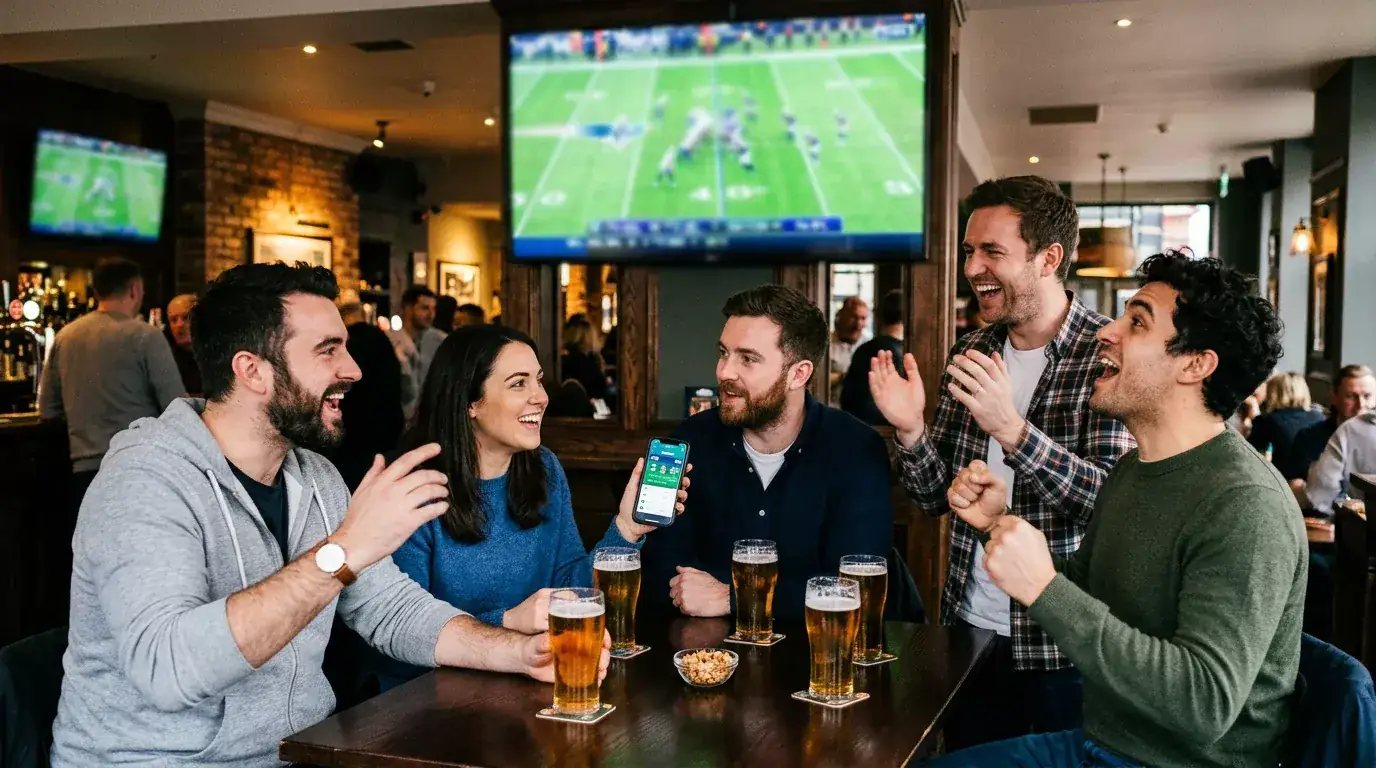
Nearly half the UK adult population — 48% — reported some form of gambling activity within the previous four weeks, according to the Gambling Commission’s latest survey data. Strip out the National Lottery and scratch cards, and 27% still participate. Of those, 10% specifically bet on sport online, contributing to a staggering 290 million online bets placed every month. Mobile phones dominate as the access point, particularly among the 18-24 bracket where 32% of all bettors access their accounts via mobile.
For NFL-specific engagement, the raw search and viewership numbers make the commercial logic obvious. The UK accounts for approximately 3% of worldwide NFL web traffic — more than Germany, which has its own international games programme. The Kansas City Chiefs alone attract 50,000 UK search queries per month, ranking as the most-searched NFL team in Britain. When that level of interest meets a mature, digitally native betting market with 290 million monthly online wagers, the convergence isn’t theoretical. It’s already happening.
Understanding how NFL betting odds work in the UK is the logical next step once you grasp the scale of this market. The numbers above aren’t background noise — they shape everything from how aggressively bookmakers price NFL lines to how much liquidity sits behind the markets you’re betting into.
How NFL Betting Works for UK Punters
The first NFL bet I ever placed was a moneyline on the Denver Broncos, priced at +150 on an American sportsbook. When I tried to explain it to a mate who’d only ever bet on the Premier League, his eyes glazed over at the plus sign. “Just tell me the fractional odds,” he said. That exchange — multiplied by a few million UK punters encountering American pricing for the first time — is exactly why this section exists.
American football generates roughly 34% of all US sports betting handle, making it the single largest category by wagering volume in the world’s biggest legal market. The betting structures that evolved around the NFL are distinct from what most UK punters grew up with, but they’re not complicated once you map them to familiar concepts. The terminology is different; the underlying logic is identical.
Point Spread
The NFL’s signature bet. The bookmaker assigns a handicap to equalise the perceived gap between teams. If the Chiefs are -6.5, they must win by 7 or more for a spread bet to pay out. UK punters know this as a handicap bet — same mechanics, different label.
Moneyline
A straight bet on which team wins the game. No handicap, no point margin. In UK terms, this is a match winner market. The favourite carries shorter odds; the underdog pays more. Simple.
Totals
A bet on the combined score of both teams — over or under a number set by the bookmaker. An NFL total might be set at 47.5. If the final score is 28-24 (52 combined), the over wins. UK bookmakers call these over/under markets, and they work identically to football totals.
| American Odds | Fractional Odds | Decimal Odds | Implied Probability |
|---|---|---|---|
| -150 | 2/3 | 1.67 | 60.0% |
| +150 | 3/2 | 2.50 | 40.0% |
| -110 | 10/11 | 1.91 | 52.4% |
| +200 | 2/1 | 3.00 | 33.3% |
| -300 | 1/3 | 1.33 | 75.0% |
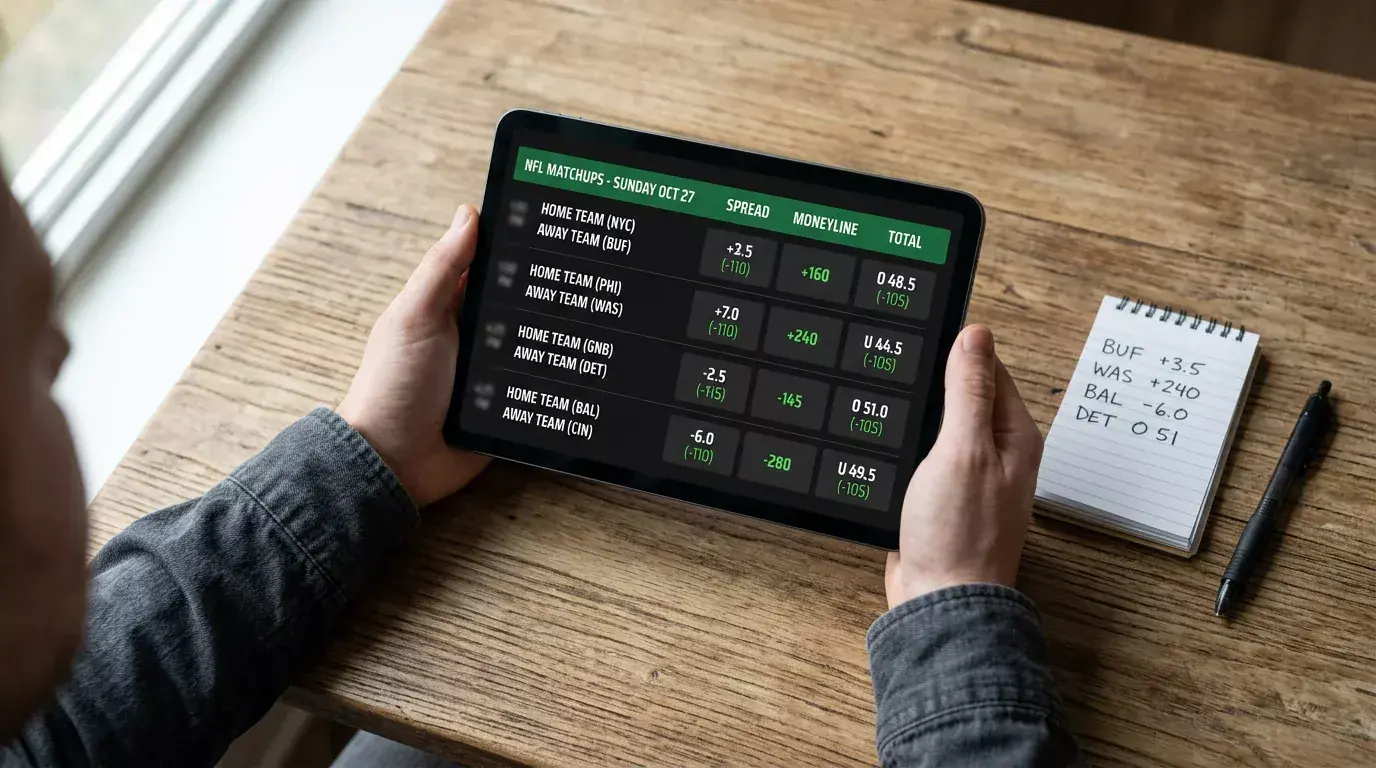
The conversion between formats trips up newcomers, but most UK bookmakers let you toggle between American, fractional and decimal display with a single setting. The table above covers the most common NFL lines you’ll encounter. A negative American number tells you how much you’d need to stake to win $100; a positive number tells you what $100 returns. Fractional and decimal equivalents mean the same thing — they just package the information differently.
GRIDBET Edge Calculator
Convert odds, price up accumulators, and check your expected value — instantly.
Every leg you add compounds the bookmaker’s margin — this is why accas carry a higher hold rate than straight bets.
Positive EV means your model rates this bet higher than the bookmaker’s implied price — the core of closing line value tracking.
For informational and educational purposes only — not betting advice. 18+ Please gamble responsibly.
Spread (Handicap) — a points advantage or disadvantage applied to a team before the game starts. The UK equivalent is the handicap market, used extensively in football and rugby betting.
Moneyline (Match Winner) — a bet on which team wins outright. No point adjustment. Standard in UK football betting as "match result" minus the draw option, since NFL games cannot end in a tie during the regular season (overtime rules apply).
Parlay (Accumulator) — multiple selections combined into a single bet. All legs must win for a payout. UK punters know this as an acca. The bookmaker's margin compounds with each added leg.
Juice / Vig (Overround) — the bookmaker's built-in margin on any given market. A "fair" two-outcome market would price both sides at 2.00 decimal. In practice, you'll see both sides at around 1.91, with the gap representing the bookmaker's cut.
Beyond these core markets, NFL betting offers props (individual player or game-event wagers), futures (season-long outcome bets like MVP or division winners), teasers (adjusted spreads at reduced odds) and bet builders (same-game multis combining several selections from one fixture). Each carries different margin profiles and different strategic considerations.
For a complete breakdown of every NFL bet type — including when each makes sense and where the bookmaker margin hides — I've written a dedicated guide to NFL bet types explained that goes far deeper than the overview here.
Choosing a UK Bookmaker for NFL Wagering
I maintain accounts with seven UK bookmakers specifically for NFL betting. Not because I enjoy the admin — identity verification alone takes the fun out of that — but because the differences in NFL market depth, odds pricing and in-play availability across operators are large enough to meaningfully affect returns over a full season. Choosing where to bet matters more than most punters realise.
The UK currently has 5,825 licensed betting premises, but that number has been shrinking by roughly 1.8% annually as the industry pivots hard toward digital. The remote sector — online and mobile betting combined — now accounts for 46% of the entire UK gambling industry's gross gambling yield, pulling in $7.8 billion and growing at 13.1% year on year. For NFL betting, which is overwhelmingly an online activity (no high-street bookie is staying open until 2am on a Monday to offer live spreads on Monday Night Football), the remote sector is where all the action sits.
When Andrew Rhodes, CEO of the UK Gambling Commission, discusses regulatory approach, he emphasises that the introduction of new rules must be based on evidence and take into account the views of consumers and other interested parties. That evidence-based philosophy shapes the licensing framework every NFL-facing bookmaker operates within. But a UKGC licence is the floor, not the ceiling. What separates a good NFL bookmaker from a mediocre one comes down to specifics that matter during a 23-week season.
| Criterion | What to Look For | Why It Matters for NFL |
|---|---|---|
| NFL Market Depth | Spread, moneyline, totals, player props, game props, futures, teasers, bet builders | Shallow operators offer only spread and moneyline. Prop and teaser availability varies wildly. |
| Live / In-Play Markets | Quarter lines, drive-by-drive props, live totals, next scoring play | NFL games kick off at 6pm, 9pm or 1am UK time. In-play depth determines whether late-night betting is worthwhile. |
| Cash Out Functionality | Full and partial cash out on pre-match and in-play NFL bets | Not all operators offer cash out on NFL markets. Some restrict it to pre-match only. |
| Odds Format Toggle | American, fractional and decimal display options | NFL lines originate in American format. Easy toggling lets you compare directly with US-sourced analysis. |
| App Quality and Latency | Sub-second odds refresh, stable in-play interface, minimal lag on bet placement | Late-night NFL sessions demand a reliable mobile experience. A two-second delay on a live bet costs real money. |
Before Opening an NFL Betting Account
- Verify the operator holds an active UKGC licence — check directly on the Gambling Commission's public register, not on the operator's own site.
- Confirm the range of NFL-specific markets: at minimum, spreads, moneylines, totals, player props and futures should be available for every regular-season game.
- Check that odds display can be toggled between American, fractional and decimal formats.
- Test deposit and withdrawal methods before committing to a staking plan — bank transfer, debit card, and at least one e-wallet option should be supported.
- Review responsible gambling tools: deposit limits, session time reminders, and self-exclusion should be accessible within two clicks from the account settings page.
One practical detail most guides skip: the spread of NFL odds across UK operators is often wider than you'd find for Premier League football. Because the NFL is still a secondary sport for most UK bookmakers' trading desks, their NFL lines carry higher margins and more variation than equivalent football markets. That variation is your opportunity. Line shopping — comparing odds across multiple accounts before placing a bet — consistently adds 1-3% to long-term returns, and it costs nothing beyond the time it takes to check a second screen.
I won't name "best" bookmakers here. Rankings change with every promotional cycle and don't account for what you personally prioritise — whether that's prop depth, in-play speed or simply the interface you find most intuitive at 1am during a fourth-quarter comeback. The criteria above are stable. Apply them, and the right operators for your approach will become obvious.
Core NFL Betting Strategies That UK Data Supports
Here's a number that should change how you think about every NFL bet you place: the average hold rate for American sportsbooks has climbed from 6.7% in 2018 to over 9% by the 2024-2025 season. Hold rate is the percentage of total handle that bookmakers keep as profit — and it's been rising steadily because operators have become better at pricing markets, better at identifying sharp action, and more aggressive about building margin into popular products like parlays and bet builders. UK bookmakers, drawing from the same data feeds and pricing models, follow the same trend. Without a deliberate strategy, you're paying a growing tax on every wager.
Do
- Line shop across a minimum of three accounts before placing any spread or total bet. The odds variation on NFL markets in the UK is wider than most punters assume.
- Track your closing line value — the difference between the odds you got and the odds at kick-off. Consistently beating the closing line is the single most reliable indicator of long-term profitability.
- Stake 1-3% of your bankroll per bet. This isn't conservative — it's mathematical survival. A 20-bet losing streak at 5% stakes wipes out your entire season.
Don't
- Chase losses with larger stakes after a bad Sunday. The NFL schedule gives you 16-17 fresh slates per season. Each one is independent.
- Default to parlays as your primary bet type. Accumulators generated 22% of total US betting handle in 2024, but bookmakers kept more than 15% of that volume as profit — roughly double the hold rate on straight bets.
- Ignore rest days and scheduling. Teams on short rest (Thursday Night Football following a Sunday game) are at a measurable disadvantage that the market doesn't always fully price.
Bill Miller, President and CEO of the American Gaming Association, frames the landscape optimistically: fans have more ways than ever to responsibly engage with the game they love, and legal sports betting enhances the fun and friendly competition that makes NFL traditions special. That's the positive framing. The data-driven framing is more pointed: without discipline, the bookmaker's structural edge turns "fun engagement" into a reliable transfer of money from your account to theirs.
Expected Value on an NFL Spread Bet at Key Number 3
Suppose you're offered a spread of -3 at decimal odds of 1.91 (American: -110) on a 7-point favourite that the market has adjusted down to -3. The number 3 matters enormously in the NFL because roughly 15% of all games are decided by exactly 3 points (the margin of a single field goal).
Step 1: At -110 both sides, the implied probability the bookmaker assigns is 52.4% per side (total: 104.8%, with 4.8% representing the overround).
Step 2: If your model estimates the favourite's true probability of covering -3 at 54%, your expected value per $100 staked is: (0.54 x $91) - (0.46 x $100) = $49.14 - $46.00 = +$3.14.
Step 3: That +3.14% edge looks small. Over 200 bets at $100, it compounds to $628 in expected profit before variance. Edges in NFL spread betting are always small — the question is whether you identify them consistently.
The strategies above — line shopping, CLV tracking, bankroll discipline, schedule awareness, key-number sensitivity — form the skeleton of any viable NFL betting system. Each one has enough depth for a standalone breakdown, and I've written exactly that in a detailed NFL betting strategy guide that walks through system construction, seasonal adaptation and the maths behind each principle.
What I want you to take from this overview is simpler: strategy isn't optional when hold rates are climbing toward 10%. It's the only thing separating a punter who's entertained from one who's profitable.
Betting the NFL London Games: UK-Exclusive Angles
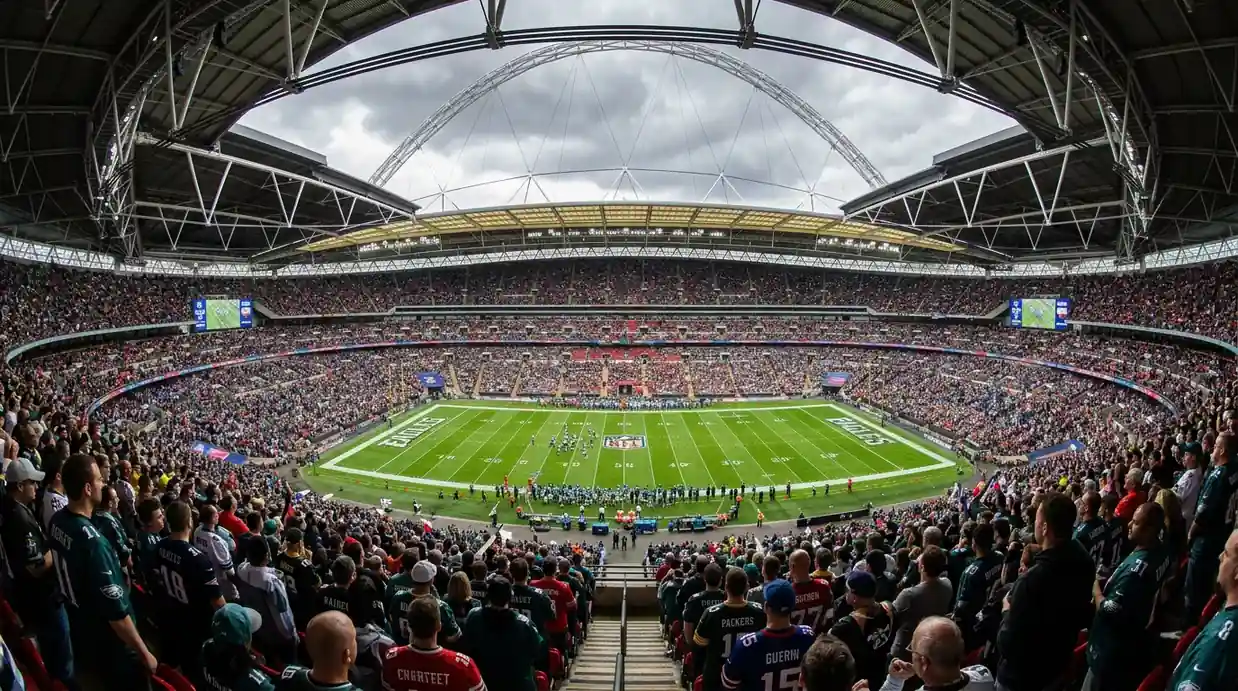
I was at Wembley in October 2025 when 86,652 people packed the stadium for Jacksonville versus New England — a record for an NFL London fixture. The atmosphere was electric, but what struck me wasn't the crowd noise. It was the number of people around me checking odds on their phones before the first snap. London Games aren't just spectacles; they've become the single most concentrated NFL betting event on the UK calendar.
The 2025 Jacksonville Jaguars vs New England Patriots game at Wembley drew 86,652 fans — the highest attendance ever recorded for an NFL regular-season game in London.
The NFL staged a record 7 international regular-season games in 2025, three of them in London split between Wembley and the Tottenham Hotspur Stadium. These games aren't exhibitions. They count in the standings, which means they carry full betting markets — spreads, moneylines, totals, props, futures implications, the lot. And they come with a set of variables that domestic NFL fixtures simply don't have.
Jet Lag and Travel Factors: NFL teams flying eastbound to London cross five time zones. Research on athletic performance after transmeridian travel consistently shows measurable decreases in reaction time, coordination and sleep quality for 48-72 hours post-arrival. Some teams arrive on Wednesday and train locally; others fly in on Thursday or Friday. The preparation gap between early and late arrivals creates a variable that domestic NFL scheduling never introduces — and one that the market doesn't always fully account for.
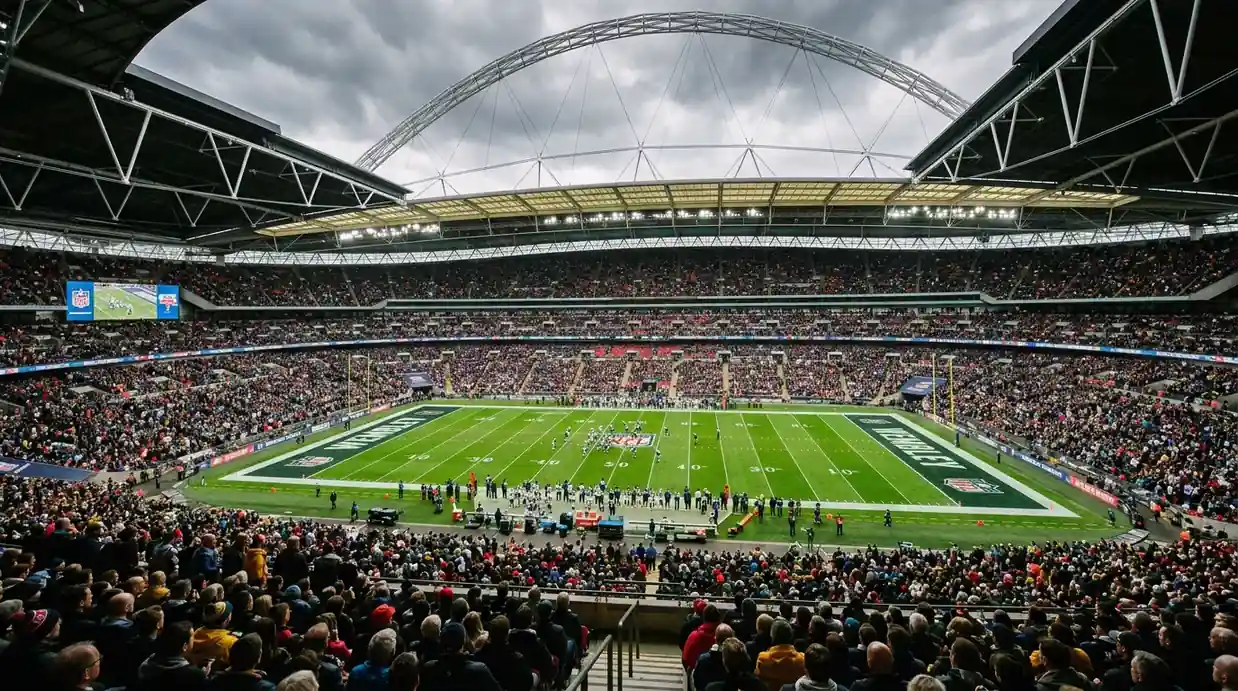
The economic gravity of these events is substantial. Major sporting events in London during 2024, including the NFL International Series, contributed an estimated $230 million to London's economy, attracted roughly 500,000 fans to the city and drew more than 200 million viewers worldwide. Henry Hodgson, the NFL's General Manager for UK and Ireland, frames the relationship as deeply rooted: the NFL has a proud history in the UK, having played regular-season games in London — a world-class sport and entertainment destination — since 2007.
From a betting standpoint, London Games present three angles that don't exist in standard NFL fixtures. First, the neutral venue effect: neither team has a home crowd, a familiar locker room or the travel-fatigue advantage that home teams enjoy in domestic games. Historical data on London fixtures shows a tighter spread distribution than typical NFL games — fewer blowouts, more margins clustered around a single score. Second, the afternoon kick-off timing. London Games typically start at 2:30pm UK time, which means the UK betting market is active during peak hours rather than the late-evening or overnight windows of standard NFL. More UK eyes means more UK money, which can create pricing anomalies when the domestic market overweights certain narratives. Third, the condensed dataset. With only 3-5 London games per season, the sample is small enough that a single blowout or upset can skew aggregate ATS records significantly — making it dangerous to draw firm conclusions but rewarding for punters who study matchup-specific factors rather than relying on aggregate trends.
More than 6 million people watched the 2025 London games through TV or online platforms, setting a new record for international NFL broadcasts. That audience translates directly into betting volume, and that volume feeds back into how UK bookmakers price these fixtures. If you're serious about NFL London Games betting, the dedicated guide I've written covers ATS records, venue-specific trends and market-timing strategies in granular detail.
UK Regulation, Tax Changes and What They Mean for NFL Punters
Most punters treat regulation as background noise — something that happens in Parliament and doesn't touch their betting slip. That's a mistake. The regulatory decisions being made right now will directly affect the odds you're offered on every NFL game by 2027, and understanding why requires following the money.
Duty Rate Warning: The UK government has announced increases to remote gaming duty from 21% to 40% and online sports betting duty from 15% to 25%, effective from April 2027. These are the largest single increases in UK gambling taxation in a generation. The impact on bookmaker margins — and by extension, on the odds available to punters — will be substantial.
The mechanics are straightforward. Bookmakers pay duty as a percentage of their gross gambling yield. When that percentage rises, operators face a choice: absorb the cost (reducing profits), pass it through to customers (widening margins and shortening odds), or restructure their market offerings (reducing promotional spend, cutting less profitable markets). History suggests the answer is usually "all three, in that order, then mostly option two." McLeish of Wiggin LLP, reviewing the industry's response, noted that the lobbying effort felt more coordinated than in previous cycles but that the justification for much higher levels of gaming duty around higher-risk verticals seemed confused. Confused or not, the rates are set.
For NFL punters specifically, the consequences play out across several dimensions. NFL markets already carry wider margins than Premier League football at most UK operators because the trading desks are smaller and the pricing less competitive. A duty increase that forces operators to widen margins further will hit NFL markets disproportionately — the sports with the thinnest existing margins have the least room to absorb additional costs without touching the odds.
Beyond the Licence — What UKGC Compliance Actually Requires: A UKGC licence obliges operators to go well beyond simply being "regulated." Mandated requirements include segregation of customer funds, anti-money laundering checks, regular reporting of suspicious activity, complaint resolution procedures conforming to ADR standards, and — increasingly — financial risk assessments for customers whose spending exceeds certain thresholds. Operators that fail compliance face fines running into millions, licence suspension, or outright revocation. For NFL punters, these obligations are the structural reason your account might face verification delays or affordability checks mid-season.

The broader regulatory landscape is shifting in parallel. Premier League clubs have collectively agreed to remove gambling sponsorship from the front of match-day shirts from the end of the 2025/26 season — a move that signals the direction of travel for sports-betting advertising in the UK. While this decision targets football specifically, the cultural pressure it reflects applies across all sports betting, including NFL wagering. The industry generates 60% of its profit from just 5% of customers — those classified as problem gamblers or at-risk individuals, according to the House of Lords Gambling Industry Committee. That statistic drives regulatory urgency, and the consequences ripple outward to every market, every sport, every bet.
Financial risk checks are the other incoming change worth tracking. The Gambling Commission has been consulting on affordability assessments that would require operators to verify a customer's financial capacity before allowing certain levels of wagering. The thresholds, methodology and implementation timeline are still under debate, but the direction is clear: the era of frictionless high-volume betting is closing, gradually but visibly.
None of this means NFL betting in the UK is under threat. It means the economics are changing. Punters who line shop aggressively, manage bankroll conservatively and understand where margin hides in their bets will adapt. Those who don't will simply pay more for the same entertainment.
Responsible Gambling: Tools, Data and UK Resources
I've had a losing month that stretched into a losing month-and-a-half. The 2022 season, Weeks 8 through 13 — my system hit a cold streak on totals, and I caught myself doing the one thing I tell everyone else not to do: increasing stake size to "recover" faster. I pulled back, stuck to the 1-3% rule, and the numbers corrected over the following month. That experience reinforced something the industry data makes painfully clear: the line between disciplined betting and problematic behaviour is thinner than most punters think.
The Data on Problem Gambling: 45% of NFL bettors in a dedicated wagering study acknowledged that they had staked more than they could afford to lose. Meanwhile, UK industry analysis reveals that 60% of gambling industry profit comes from just 5% of customers — those identified as problem gamblers or individuals at risk of harm. These aren't abstract statistics. They describe real financial damage concentrated among a small, vulnerable portion of the betting population.
The gender split in UK sports betting participation adds another layer: 15% of men and 4% of women bet on sport, according to the Gambling Commission's 2025 data. NFL betting skews even more heavily male. The demographic profile of the typical NFL punter — male, 25-44, digitally active, comfortable with higher-frequency betting through mobile apps — overlaps significantly with the demographic profile most associated with elevated problem-gambling risk.
Tres York, VP of Government Relations at the American Gaming Association, has been vocal about the risks posed by unregulated operators: these operators present themselves like legal, regulated platforms but operate outside the law and regulation, with few if any responsible gaming tools, no regulatory oversight and no consumer protections. While York's comments targeted US-based sweepstakes casinos, the principle applies globally. UK punters using UKGC-licensed bookmakers have access to protections that unlicensed platforms don't offer. Using those protections is a separate decision — and one too few punters make proactively.
Responsible Gambling Tools Available at UK-Licensed Bookmakers
- Deposit Limits: Set daily, weekly or monthly caps on how much money you can add to your account. Most operators allow you to lower a limit immediately but require a cooling-off period to raise one.
- Self-Exclusion: Remove yourself from one or all UK bookmakers for a fixed period (typically 6 months to 5 years). GamStop provides a single self-exclusion service covering all UKGC-licensed online operators.
- Session Time Reminders: Alerts that notify you after a set period of continuous activity. Particularly useful during late-night NFL sessions where time perception distorts.
- Reality Checks: Pop-up notifications showing your net win/loss position during a session. Some operators display these automatically; others require activation in account settings.
- Cooling-Off Periods: Temporary account suspensions of 24 hours to 6 weeks, available without full self-exclusion. Useful for stepping back after a bad run without committing to a longer exclusion.
I set deposit limits on every NFL betting account I hold. Not because I think I'm at risk of a spiral, but because limits remove the decision from the moment when judgment is at its weakest — 1am, your fourth-quarter parlay just died, and the late-night West Coast game is still live. A pre-set limit makes the "just one more" bet structurally impossible rather than relying on willpower.
If you recognise any of the patterns described above — increasing stakes to recover losses, betting beyond what your budget supports, spending more time on betting apps than you intended — the resources exist and they work. GamStop, the National Gambling Helpline (0808 8020 133), GamCare and Gambling Therapy all provide free, confidential support. Using them is not a sign of weakness. It's the single best decision a punter can make when the numbers stop being entertainment and start being a problem.
Super Bowl Betting From the UK: Scale and Opportunity
Nothing else in sports betting comes close — and nothing tests the discipline discussed in the previous section quite like the Super Bowl. Super Bowl LVIII in February 2024 attracted more than $23 billion in total wagers, making it the most heavily bet single event in US sports history. The following year, the American Gaming Association projected a record $1.76 billion in legal handle for Super Bowl LX alone. That figure captures only the regulated US market; when you add UK, European and global betting volume, the total is significantly larger.
Super Bowl LX Projected Handle
$1.76 billion through US legal sportsbooks — a new record
Super Bowl LVIII Total Handle
Over $23 billion in combined global wagering
Prop Market Breadth
Major bookmakers offer 400+ individual prop bets per Super Bowl, from MVP to coin toss to halftime show duration
Bill Miller of the AGA captures the cultural weight succinctly: no single event brings fans together like the Super Bowl, and the record wagering figures show just how much Americans enjoy sports betting as part of the experience. For UK punters, the Super Bowl presents a unique window. It's the one NFL game that even casual followers watch. Sky Sports broadcasts it live. Bookmakers promote it aggressively. And the sheer volume of markets available — player props, game props, novelty bets, quarter-by-quarter lines — creates opportunities for punters who do their homework to find mispriced selections that wouldn't exist in a lower-profile fixture.
Prediction markets are muscling into Super Bowl territory: Kalshi's NFL trading volume during the 2025 season exceeded $62.5 million, and Super Bowl LX alone approached $150 million in prediction market volume — a category that didn't meaningfully exist three years earlier.
The timing works both for and against UK bettors. The Super Bowl kicks off around 11:30pm UK time, which means the in-play window runs until roughly 3am. That's late enough to thin out casual bettors, leaving a market dominated by committed punters and sharp money. Live markets during the Super Bowl carry significant volume even at those hours — the AGA's data suggests more Americans bet in-play during the Super Bowl than during any other single game. UK bookmakers, pricing off the same data feeds, reflect that liquidity.
Prop bets are the defining feature of Super Bowl wagering. Standard game markets — spread, moneyline, total — operate the same way they do for any regular-season game. But props explode in volume and variety during championship week. Player performance props (quarterback passing yards, first touchdown scorer, rushing totals), game-script props (first scoring method, winning margin, total touchdowns) and novelty markets (coin toss, anthem duration, Gatorade colour) all open in the weeks before the game. The bookmaker margin on novelty props is typically much wider than on core markets — sometimes exceeding 20% overround — which means they function more as entertainment than as serious wagering opportunities. Player performance and game-script props, however, can offer genuine value when public money floods in on narrative-driven selections.
For a full breakdown of Super Bowl market structure, prop strategy and historical trends, the Super Bowl betting UK guide covers what this overview can't — including how UK bookmaker specials compare to the underlying market pricing and where the margin tends to hide.
NFL Sports Betting UK: Frequently Asked Questions
Is NFL betting legal in the UK?
NFL betting is fully legal in the UK through any bookmaker holding a valid licence from the UK Gambling Commission. Unlike the United States, where legality varies state by state under a patchwork of post-PASPA legislation, the UK operates a single nationally regulated market under the Gambling Act 2005. Every licensed operator must meet the same standards for consumer protection, responsible gambling tools and financial transparency. You can verify any bookmaker's licence status directly on the Gambling Commission's public register. There are no sport-specific restrictions — if an operator is licensed to offer sports betting, NFL markets are included.
How do American odds convert to fractional odds used by UK bookmakers?
American odds use positive and negative numbers to express the same information that fractional odds convey. A positive American number (+200) tells you the profit on a $100 stake — +200 means you'd win $200, which translates to 2/1 fractional. A negative number (-150) tells you how much you need to stake to win $100 — -150 means staking $150 to win $100, which converts to 2/3 fractional. Most UK bookmakers offer a toggle in account settings to switch between American, fractional and decimal display. For quick mental conversion: divide the positive American number by 100 to get the fractional numerator (with 1 as the denominator), or for negatives, put 100 over the absolute value. In practice, most punters set their preferred format once and let the platform do the conversion automatically.
When does the NFL betting season start and what are the key calendar dates?
NFL futures markets — Super Bowl winner, conference champions, MVP, season win totals — open as early as February, immediately after the previous Super Bowl. The draft in late April triggers significant line movement on futures. Preseason games run through August, with limited but available betting markets. The regular season kicks off in early September and runs 18 weeks through to early January, delivering a weekly slate of 14-16 games every Sunday, Monday and Thursday. The playoffs begin in mid-January with Wild Card weekend, followed by Divisional, Conference Championship and finally the Super Bowl in early February. For UK punters, the London Games (typically in October) and the Super Bowl are the two peak periods for domestic betting volume and promotional offers.
What is the best overall strategy for betting on the NFL from the UK?
The most effective framework combines four elements: bankroll management (staking 1-3% of your bankroll per bet), line shopping (comparing odds across multiple UK bookmaker accounts before every bet), closing line value tracking (measuring whether your bets consistently beat the market's final price), and schedule awareness (factoring in rest days, short weeks and travel). No single approach guarantees profit — bookmaker margins are real and growing — but punters who apply these principles systematically outperform those who bet on instinct. The key numbers 3 and 7 in NFL spreads (representing field goal and touchdown margins) are particularly important to understand, as games decided by exactly these margins occur far more frequently than other margins.
How does NFL London Games betting differ from standard NFL wagering?
London Games introduce three variables absent from domestic NFL fixtures: a neutral venue (neither team has home-field advantage, which typically accounts for 2.5-3 points of spread value), transatlantic travel fatigue (teams cross five time zones, with preparation schedules varying significantly), and concentrated UK betting volume (afternoon kick-offs in the UK mean the domestic market is active during peak hours). The historical dataset is small — roughly 30-40 games over nearly two decades — which makes aggregate trend analysis less reliable than for standard NFL. Successful London Games betting requires matchup-specific analysis rather than broad statistical patterns.
Do UK bookmakers offer in-play markets for NFL games despite the late kick-off times?
Most major UK bookmakers offer comprehensive in-play markets for NFL games, including live spreads, adjusted totals, next scoring play, quarter lines and in some cases drive-by-drive props. The challenge is timing: the standard 6pm UK kick-off (1pm Eastern) and 9:25pm kick-off (4:25pm Eastern) slots are manageable for most bettors, but Sunday Night Football (1:20am Monday UK time) and Monday Night Football (1:15am Tuesday UK time) test commitment. Live betting volume from UK accounts naturally drops during the overnight games, which can slightly widen spreads on in-play markets due to reduced liquidity. London Games, by contrast, kick off at 2:30pm UK time, generating the highest in-play activity from UK bettors of any NFL fixtures.
What responsible gambling tools are available for NFL punters in the UK?
All UKGC-licensed bookmakers must provide deposit limits (daily, weekly, monthly), session time reminders, reality checks showing your net position during a session, and access to self-exclusion. GamStop offers a single registration that excludes you from all UK-licensed online operators simultaneously, with exclusion periods ranging from 6 months to 5 years. Individual bookmakers also offer cooling-off periods of 24 hours to 6 weeks and account closure options. These tools are accessible through your account settings. If you're concerned about your betting behaviour, the National Gambling Helpline (0808 8020 133), GamCare and Gambling Therapy provide free, confidential support.
Created by the ”nfl Sports bet” editorial team.